Hello August!

Hello strangers! Ehem...my apologies for promising to attempt blogging about things other then the Tour de Fleece during the month of July and then promptly disappearing for four weeks. In the interim, I went to the Pyrenees for a week and packed up/moved house/started unpacking, so it's all been a bit nuts.

The Pyrenees were lovely, the weather was just the antidote to British Summer (TM), the "real" Tour (the cycling version that is) was spectacular, and while continuing to spin, I started a wee baby sweater for a baby due tomorrow.
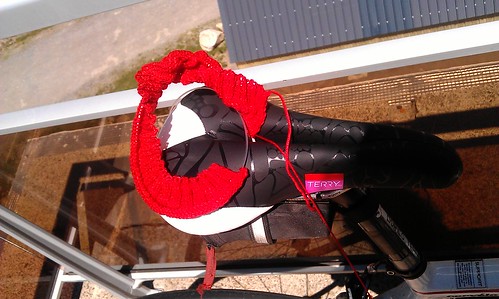
Rest day projects
This morning, I wove in the last ends on the buttonband, and this teensy tiny sweater is now blocked and drying.
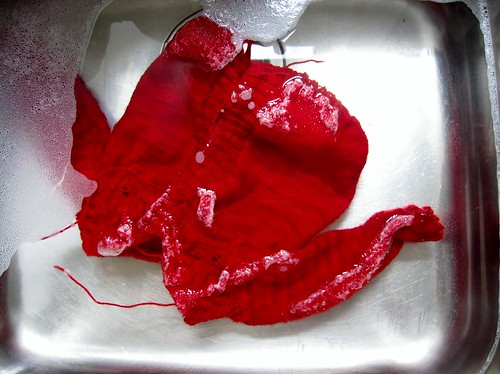
Little Oak
The pattern is Little Oak, the child sized-version of the Gnarled Oak Cardigan by Alanna Dakos, from Coastal Knits. A great, fast pattern (hooray for 6-month sized sweaters!), with enough interest in the yoke to keep it from being too boring. I'll give more details when I find some buttons and get it ready to go off to the Wee Lad for whom it is destined - hopefully finding buttons this afternoon will mean that he will realize it is time to evict himself ASAP, as his poor Mum is getting quite uncomfortable. However, I will hold off on button shopping until after I meete her for our dog walk this afternoon - I really don't want her going in to labor on Wimbledon Common!

Spun up colourways: playing with Oregon Green and YFP

Usually I end up with some leftovers after fiber has been weighed and bagged and tagged. These are perfect for spinning up as sample skeins, or for playing around with different techniques. Last month, before crazy vacation and moving plans hit in full force, I did just that with a bunch of scraps of Oregon Green and YFP Dorset Horn (currently available in the shop here).

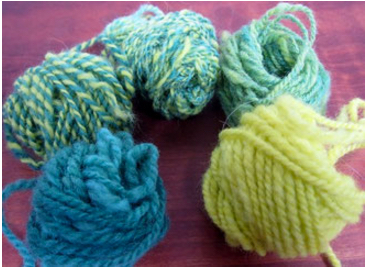
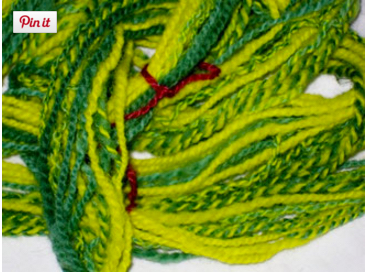
I took the scraps from these two dyelots and spun up five different 2-ply sample skeins. The first two are the obvious: each colorway plied with itself. Then I did a skein of 2-ply using one single from each colorway.

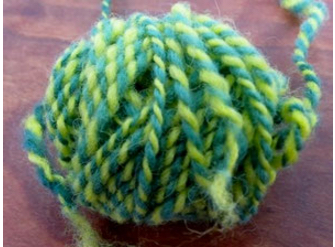
Oregon Green 2-ply

Oregon Green 2-ply

OG/YFP marled 2-ply

OG/YFP marled 2-ply

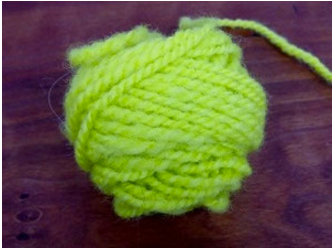
YFP 2-ply

YFP 2-ply

That was all well and good, and relatively straightforward. But then I decided to try another spinning technique to try blending the colors a bit more. I took a piece of each color of top and held them together while I spun, so that the single incorporated a bit of yellow and a bit of green. Sometimes there was more of one color then the other, but I tried to keep it as evenly distributed between green and yellow as I could.

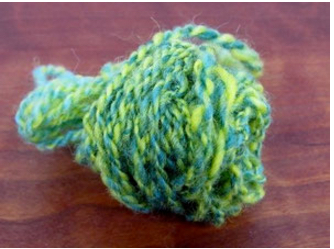
OG/YFP blended 2-ply

OG/YFP blended 2-ply

You can see that, while it's still possible to distinguish yellow and green, they are much more blended together.

I did all these samples in a couple of days, and then put the experiment away for a bit. As any scientist will tell you, sometimes things need to sit and ferment for a while before you conclude anything. In the meantime, I started thinking about Tour de Fleece, and my goal of spinning up some yarn from raw fleece. This, of course, requires some kind of fiber prep, and my current tools include a pair of hand cards. It occurred to me that a nice addition to the first set of sample skeins would be some color blending by carding. And voila!

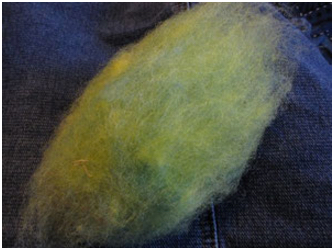
Before carding

Before carding

Final blend

Final blend

After 3 passes

After 3 passes

Final 2-ply

Final 2-ply

The resulting yarn was a nice yellowy, in some places almost minty (!), green. This is a good demonstration of how it doesn't take much yellow to change a color - given the darkness of the Oregon Green fiber alone (see first picture of the hand cards above), you might expect this to be a darker final product. But a little bit of yellow goes a long way...

So what does this all mean from a knitting perspective? And why would you bother carding or blending during the spinning if you've got two different colors of fiber?

All five samples

All five samples

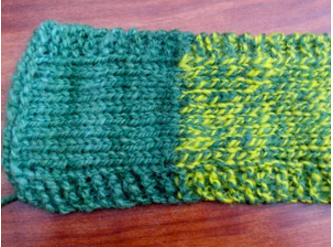
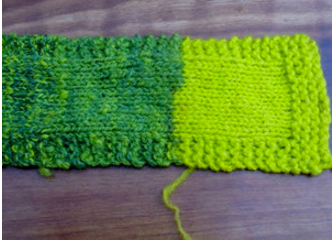
I knit up a simple swatch with all of the samples, in this order: OG/OG 2-ply, OG/YFP marled 2-ply, OG/YFP blended 2-ply (colors held together during spinning), OG/YFP carded 2-ply and finally, the YFP/YFP 2-ply.

It's a bit hard to see the transitions between the middle three samples in this picture, so let's add some markers.

The change from OG/OG to OG/YFP is easy to see - as soon as you add any yellow at all, you get a yarn that, from a distance, reads as a strong yellow-green. If you look at it a bit closer, you can see the dramatic marl created by yellow and green singles lying next to each other.

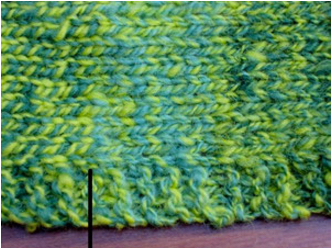
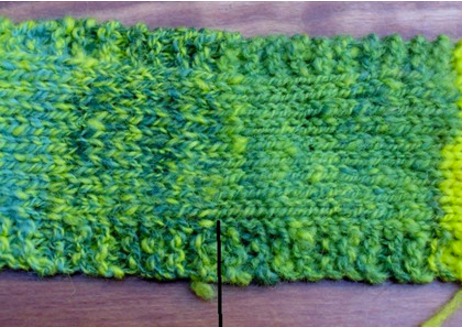
However, the difference between the OG/YFP 2-ply yarn, the OG/YFP blended yarn (where the colors were held together during spinning of the singles), and the carded OG/YFP yarn is harder to distinguish (black line indicates the point where the yarns switched).

Marled to blended transition

Marled to blended transition

Blended to carded transition

Blended to carded transition

To my eye, the biggest difference between the blended and carded yarns is the uniformity of the carded color - there is much less variation since the fibers were thoroughly blended before spinning. The blended-while-spun yarn has much more variation, which may or may not be what you're looking for.

Finally, the comparison between the carded OG/YFP yarn and the YFP/YFP 2-ply.

No black line needed to indicate change in yarn, right?

So what does this mean for you as a spinner? Well, I think that depends...what a helpful answer! But really, it does depend on what your ultimate goal is. If you have a fiber that is dyed in a colorway with a lot of contrast, you can spin it to preserve and enhance those contrasts. Maybe you want very stripey socks, in which case you would chain-ply your singles. Or you think the colors would look great in colorwork mittens, in which case you can split the dyed top into its component colors and spin them seperately - just because it came to you as one piece of top doesn't mean you can't split up the colors just as you like!

On the other hand, maybe you want to blend the colors a little bit, in which case a 2-ply might work well. Depending on how you split the top, you can end up with sections of marled yarn, maybe some sections where the colors line up and enhance each other. A 3-ply will blend the colors even more.

Or maybe you really want to mix things up a lot, in which case you could spin two different colors together, creating a marled single that will further blend the colors with plying. Or maybe you want to create a yarn that is a totally different color then the top you started off with, in which case you could whip out the hand cards or drum carder - a word of warning on carding, however: if you are trying to blend colors that lie across from each other on the color wheel, you may end up with a whopping pile of brown yarn!

OG/OG, OG/YFP and YFP/YFP together

OG/OG, OG/YFP and YFP/YFP together

I hope this has been and interesting and useful post. Have you done your own color experiments? What effect do you like best? What's been an absolute disaster? Let me know in the comments, and we can talk about how to get the color effects you want, depending on your starting point.

I hope everyone is enjoying the (late-arriving but finally here) British summer, and happy spinning!

Rachel

Next verse, same as the first

I realized that for those of you not caught up in the ridiculous spinning/fiber-photo frenzy that is the Tour de Fleece, the next few weeks may be really, really, boring. I will try to do my bit to blog about something other then spinning - day after day of pictures showing miniscule incremental progress on natural colored fleece is about as exciting as watching paint dry. Here, have some knitting instead!

It is still knitting with handspun, but I'm 12 rows from the end of the body of my Garter Yoke Cardi, knit out of the Timber Romney I spun up last year during TdF.


Every time I knit with handspun, I am swept away by watching the color changes, and the way the different plies play off of each other and transition from one color to the next. These pictures are not quite right colorwise, but it's late and I can't be bothered to go back and redo the pictures tonight. I'll get a better color balance next time...

PS - here's today's spinning tally:
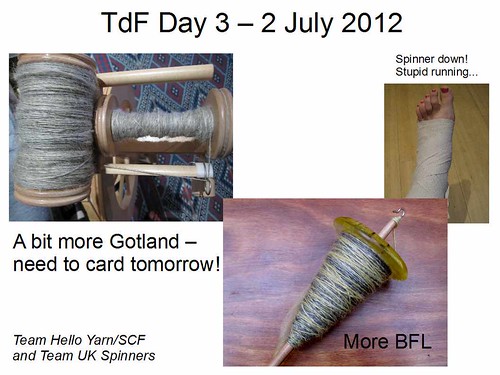
TdF day 3

Ready? Steady? Go!

And we're off!
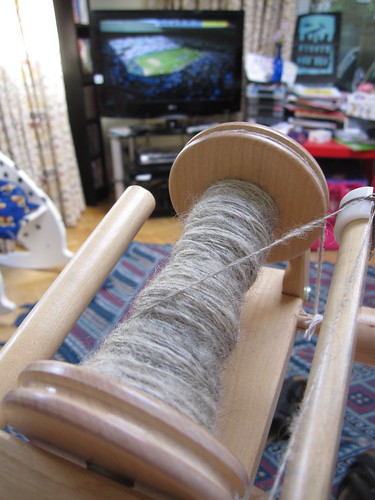
TdF spinning while watching Wimbledon
45 min to spin, 5 hand-carded Gotland rolags on the bobbin. This is going to be some rustic yarn y'all, as I keep coming across undraftable tangles and neps. Clearly my carding techinique needs work! I'm trying to pull out the little bits of second cuts that made it through the sorting/washing/carding process, but it's slow going!

Please to be ignoring the inappropriate sport in the background - I got distracted by Ms. Williams!

Syringa Tank

Today, Issue 10 of Knit Now hits the newstands, and I can share with you my excitement at having one of my patterns included in the magazine.
Photo credit: Tim Bradley for Practical Publishing

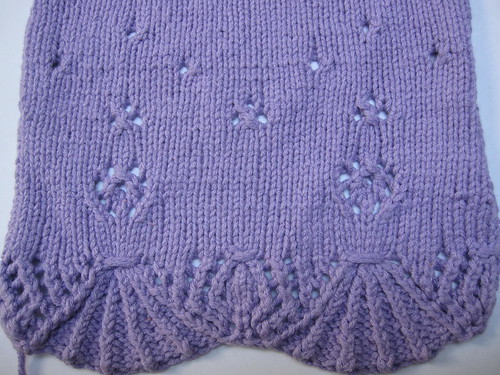
Syringa is a girl's A-line tank knit in Rowan Amy Butler Belle Organic DK, a cotton-wool blend yarn with great elasticity. The tank is sized from 2-8 years old, and is worked at a gauge of 21 stitches/36 rows per 4 inches/10 cm. Worked from the bottom up, the hem has a graduated lace pattern before working the body in stockinette (or stocking stitch, if you prefer).
IMG_1915
That's a photo of my original swatch, worked in Rowan Calmer which has sadly been discontinued. I hope you enjoy the pattern, and anyone who has any questions should please contact me (email on About Me page).

I'm thrilled to have had the opportunity to work with the staff of Knit Now - the process was smooth and stress-free from beginning to end. The whole issue is packed full of great patterns, so if you have the opportunity to grab a copy, I recommend it!